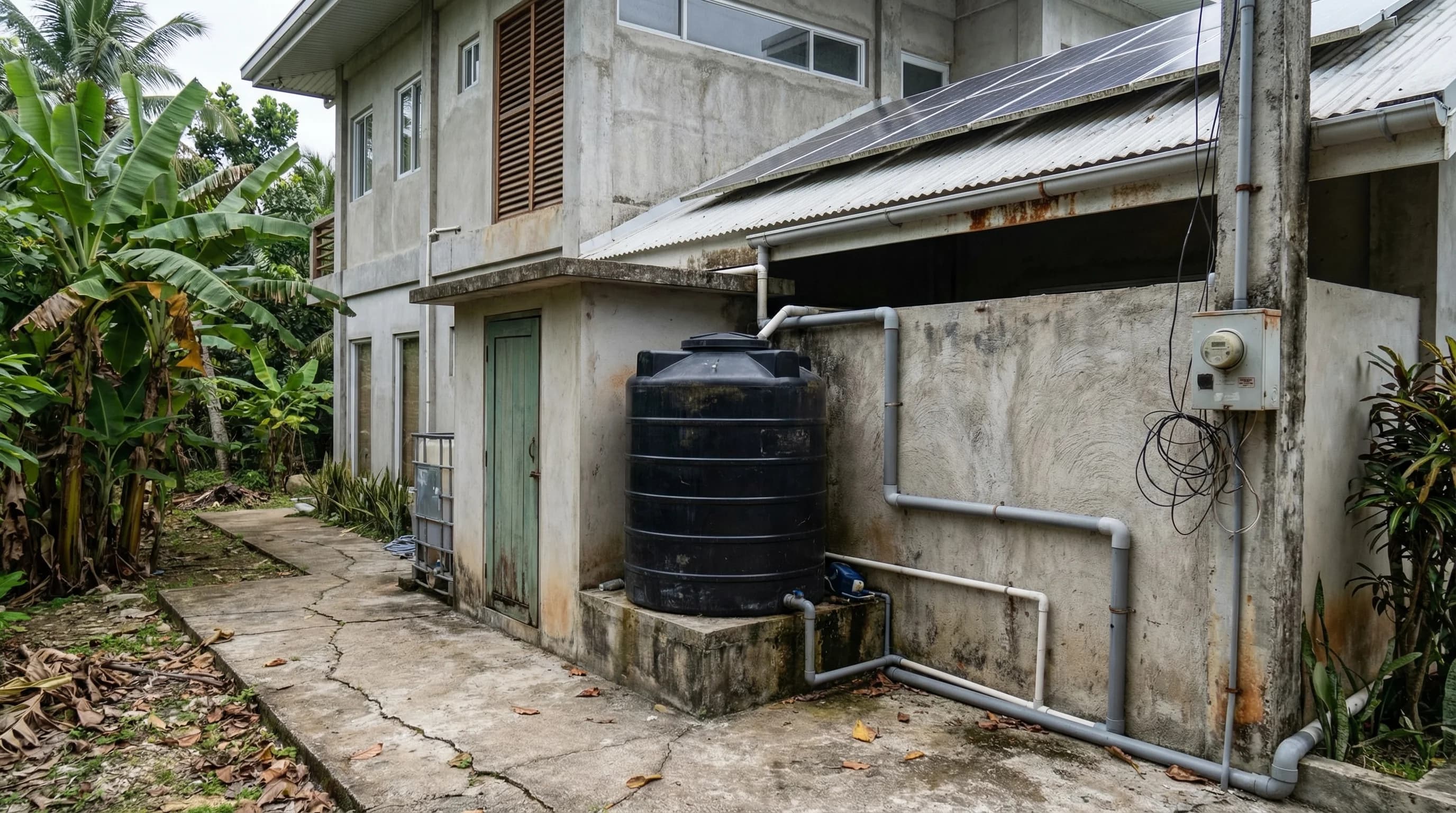
Daniel spent roughly ₱245,000 on his entire infrastructure setup in Malinao: a deep well at ₱60,000, a septic tank for ₱30,000, and used solar panels, battery, and generator imported from his other project on Tambaliza. That's for a 2-bedroom beachfront cottage. Most builders on Siargao quote ₱500,000 to ₱1.2 million for the same scope when you buy everything new.
The gap between those numbers tells you something important. On an island where SIARELCO sometimes stops issuing new grid connections and municipal water doesn't reach most build sites, how you handle power, water, and waste will shape your budget more than most people expect.
What Off-Grid Infrastructure Actually Costs on Siargao
Here's the full picture, pulling from our cost calculator rates and real builder data:
| Component | Budget Option | Standard | Premium |
|---|---|---|---|
| Solar system | ₱550,000 (6kW) | ₱900,000 (10kW) | ₱1,350,000 (15kW) |
| Deep well | ₱90,000 (shallow) | ₱135,000 (standard) | ₱195,000 (deep) |
| Water filtration | ₱0 (none) | ₱35,000 (basic) | ₱90,000 (UV) |
| Septic tank | ₱55,000 (standard) | ₱85,000 (high quality) | ₱85,000 (high quality) |
| SIARELCO connection | ₱25,000 | ₱50,000 | ₱50,000 |
| Transformer (remote) | n/a | n/a | ₱150,000 |
| Total range | ₱720,000 | ₱1,205,000 | ₱1,920,000 |
Those totals assume you're buying everything new from local vendors. Daniel's approach of importing used equipment cut the solar line item by roughly 70%.
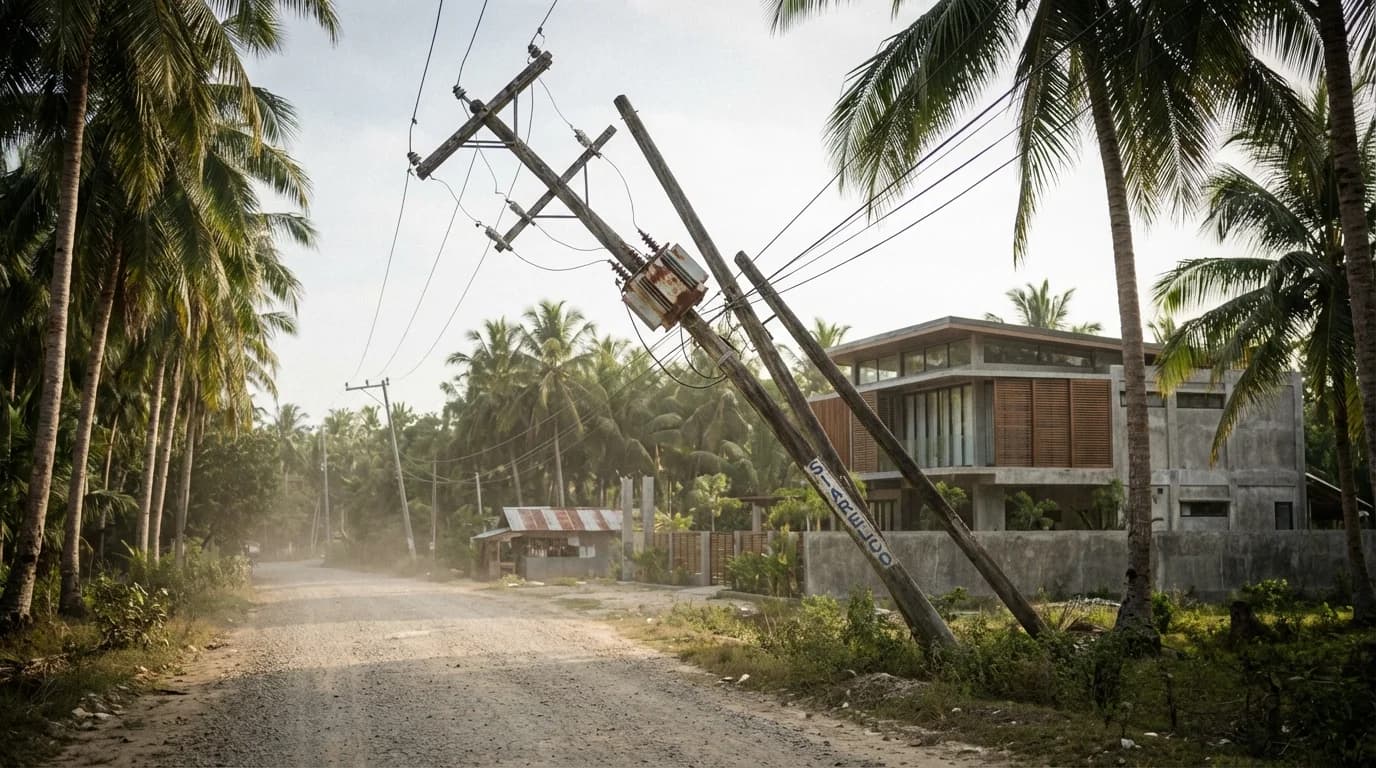
SIARELCO: The Grid Situation You Need to Understand
SIARELCO is Siargao's sole electricity provider, and it has capacity problems. At various points, the utility has stopped issuing new connections entirely because the grid couldn't handle more load. If you're buying a lot in a developing area outside General Luna or Cloud 9, there's a real chance you won't get a grid connection on your timeline.
Even when connections are available, expect:
- Application to connection: 2 to 6 months (sometimes longer)
- Connection fee: ₱25,000 to ₱50,000 depending on distance to the nearest pole
- Transformer cost: ₱150,000 if your lot is in a remote area without an existing transformer
- Brownouts: Regular, especially during typhoon season (June to November)
This is why most villa builders on Siargao plan for some level of power independence regardless of whether they intend to connect to the grid.
Power: Grid vs. Solar vs. Hybrid
| Grid + Generator Backup | Solar Hybrid (Grid Backup) | |
|---|---|---|
| Upfront cost | ₱25–200K | ₱550K–900K |
| Monthly bill | ₱3–8K | ₱500–1.5K |
| Brownout protection | Generator only | Battery + grid failover |
| Guest experience | Interruptions likely | Seamless switchover |
| Payback period | n/a | 5–8 years |
| Typhoon resilience | Low | Medium (batteries last 6–12 hrs) |
For a rental villa, we recommend hybrid solar with SIARELCO as backup. The upfront cost is higher, but your guests never experience brownouts, your monthly bills drop to almost nothing, and the system pays for itself within 5 to 8 years.
Here's how our calculator prices solar systems:
| System Size | Price | Best For |
|---|---|---|
| 6kW | ₱550,000 | 1-2 BR villa, hybrid with grid backup |
| 10kW | ₱900,000 | 2-3 BR villa, near full independence |
| 15kW | ₱1,350,000 | 3-4 BR with pool pump and multiple AC units |
| 25kW+ | ₱2,100,000 | Large compound or multi-unit property |
A vendor quote from March 2026 priced a full off-grid system (20 panels, 2 batteries, 2 inverters) at ₱1,100,000. That's sized for two AC units, a water heater, pool pump, and fridge. The 6kW hybrid option at ₱550,000 handles the same appliances but leans on SIARELCO during peak loads.
Typhoon Season and Solar
Siargao gets hit hard between June and November. Your solar panels need proper mounting rated for at least 200 km/h winds. Good installers bolt panels flat to the roof at a 10-degree angle rather than using tall racks that catch wind. Expect 20 to 30% less solar production during the rainy months due to cloud cover. That's another reason to keep a grid connection or generator as backup.
For a deeper breakdown of panel sizing, roof specs, and vendor quotes, read our full solar power costs guide.
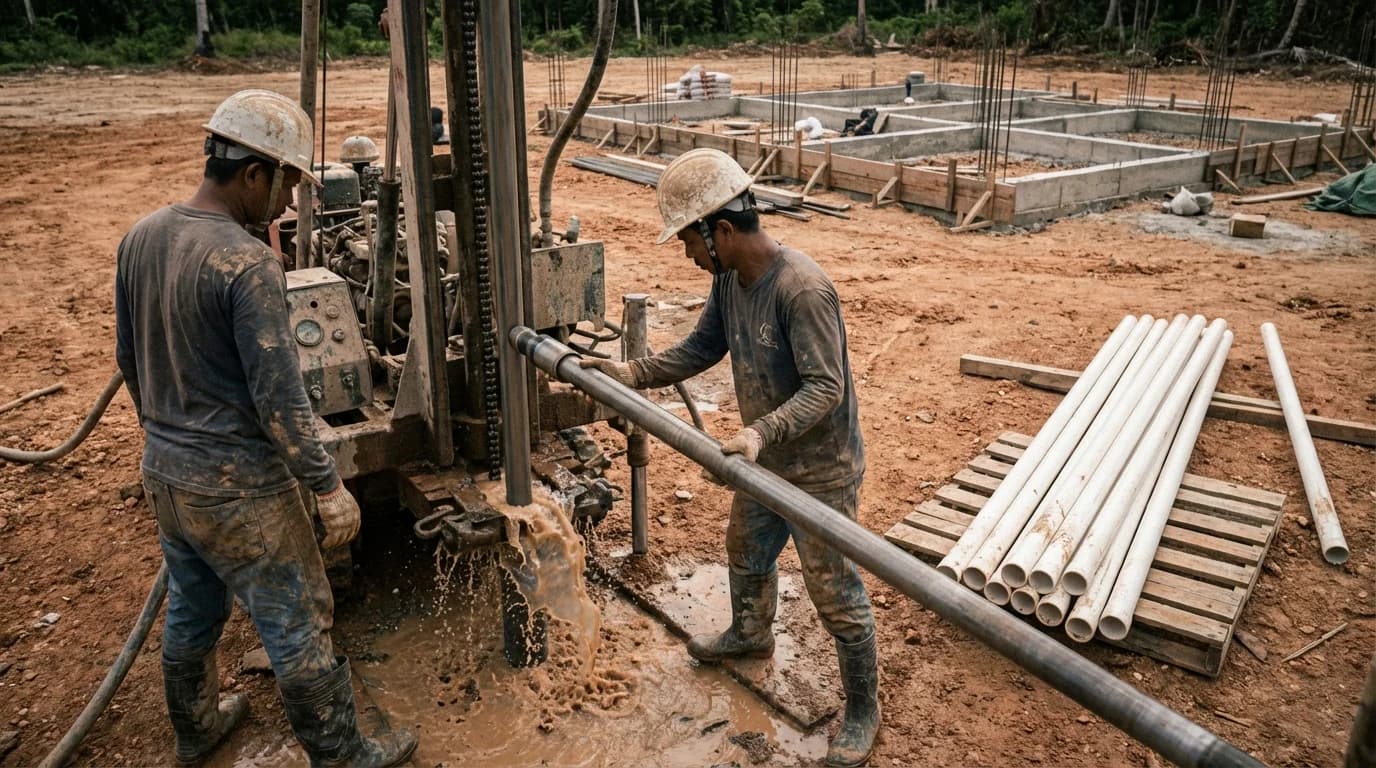
Water: Deep Wells Are the Standard
Municipal water doesn't reach most building lots outside General Luna's center. That means drilling a well. On Siargao, the water table is relatively shallow and accessible compared to other Philippine islands, which keeps costs reasonable.
| Well Type | Depth | Cost | Notes |
|---|---|---|---|
| Shallow | 30-50 ft | ₱90,000 | Works in most coastal areas |
| Standard | 60-90 ft | ₱135,000 | Recommended for year-round reliability |
| Deep | 90+ ft | ₱195,000 | Rocky terrain or areas with salt intrusion |
Machine drilling runs about ₱1,500 per foot with a ₱15,000 mobilization fee. If the drill hits hard rock, expect a surcharge of ₱500 per foot. The alternative is manual "bagdak" drilling, which is cheaper but can't penetrate rock and produces lower quality wells.
Daniel paid ₱60,000 for his well in Malinao. That's below our calculator range because he hired local well drillers directly rather than going through his main builder. Separating infrastructure subcontracts from the general contractor is a common way to save on Siargao.
Water Filtration
Well water on Siargao is drinkable in many areas, but most villa owners add at least a basic filter, especially for rental properties. Options from our calculator:
| Filter Type | Cost | What It Does |
|---|---|---|
| None | ₱0 | Raw well water (fine for washing/bathing) |
| Basic sediment | ₱35,000 | Removes particles and sediment |
| UV sterilization | ₱90,000 | Kills bacteria, safe for drinking |
| Whole house | ₱180,000 | Multi-stage system for every tap |
For rental villas, UV sterilization at ₱90,000 is our recommendation. Guests expect clean water, and a UV system gives you a selling point in your Airbnb listing.
For the full breakdown on well types and drilling, see our deep well water costs guide.
Septic: Simple but Don't Cheap Out
Siargao has no sewer system. Every build needs a septic tank. There are two options:
| Type | Cost | Construction | Lifespan |
|---|---|---|---|
| Standard (CHB) | ₱55,000 | Concrete hollow blocks | 15-20 years |
| High quality (poured) | ₱85,000 | Poured reinforced concrete | 25+ years |
Daniel paid between ₱10,000 and ₱30,000 for his septic, which reflects hiring separate local workers instead of going through the general builder. He's building a cottage-tier property, so a basic CHB tank made sense. For a rental villa targeting tourists, we'd recommend spending the extra ₱30,000 for the poured concrete version. It won't crack in Siargao's coral limestone soil, and you won't be digging it up in 10 years.
Read the full comparison in our septic systems guide.
Daniel's Infrastructure Playbook: The Budget Approach
Daniel's setup for his 2-bedroom Malinao cottage shows what's possible when you think creatively:
| Item | What He Did | Cost | New Price Equivalent |
|---|---|---|---|
| Solar + battery + generator | Imported used equipment from Tambaliza | ~₱155,000 (est.) | ₱550,000+ |
| Deep well | Hired local drillers directly | ₱60,000 | ₱90,000-135,000 |
| Septic tank | Separate workers, not through builder | ₱10,000-30,000 | ₱55,000-85,000 |
| SIARELCO connection | Applied (pending) | ₱25,000-50,000 | ₱25,000-50,000 |
| Total | ~₱245,000-295,000 | ₱720,000-820,000 |
His main hack was importing used solar panels, a battery bank, and a generator from his Tamba-Tikki Beach House project on Tambaliza island. Not everyone has a second property to raid for equipment, but the principle holds: used solar gear works fine, and the Philippines has a growing secondhand market for panels and inverters.
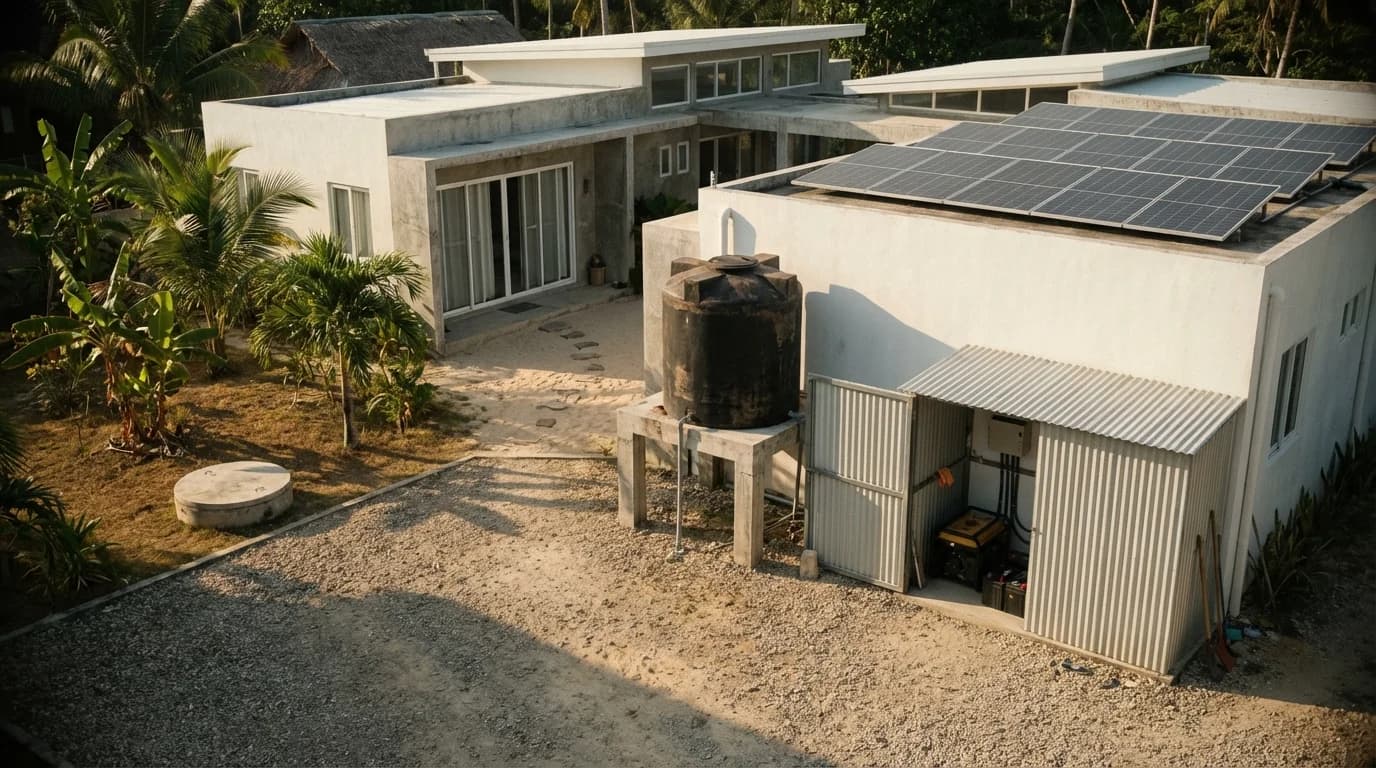
How to Budget Your Infrastructure
For planning purposes, here's what we recommend allocating based on property type:
| Property Type | Infrastructure Budget | Includes |
|---|---|---|
| Budget cottage (1-2 BR) | ₱300,000-500,000 | Shallow well, basic septic, small solar or generator |
| Standard villa (2-3 BR) | ₱700,000-1,000,000 | Standard well, UV filter, high-quality septic, 6kW solar |
| Rental villa (3-4 BR) | ₱1,200,000-1,800,000 | Deep well, whole-house filter, HQ septic, 10-15kW solar |
These numbers are baked into our cost calculator, which sizes infrastructure to your specific build. Plug in your bedrooms, quality tier, and location, and it'll show you exact costs.
Frequently Asked Questions
Can I build on Siargao without a SIARELCO connection?
Yes. Many villas run entirely on solar and generator backup. SIARELCO connections aren't guaranteed, especially in areas outside General Luna and Tourism Road. A 6kW or 10kW solar system with battery storage handles a typical villa's daily load. Keep a generator for extended cloudy periods during rainy season.
How long does it take to drill a well on Siargao?
Machine drilling takes 1 to 3 days depending on depth and soil conditions. Scheduling the drill rig is often the bottleneck, not the drilling itself. Book your driller 2 to 4 weeks in advance, especially during the dry season (March to May) when everyone is building.
Is well water on Siargao safe to drink?
It depends on your location and well depth. Coastal shallow wells can have salt intrusion. Deeper wells in most areas produce good quality water, but we still recommend at least UV sterilization (₱90,000) for any rental property. Get your water tested after drilling. It costs around ₱2,000 to ₱5,000 at a lab in Surigao City.
What happens to solar panels during a typhoon?
Properly mounted panels (bolted flat to the roof at a low angle) survive most typhoons. The risk comes from flying debris, not wind load on the panels themselves. After Typhoon Odette in 2021, many rooftop solar systems in Siargao survived while the roofs underneath were damaged. Insurance that covers solar installations costs roughly 1.5 to 2% of system value per year.
Should I install solar before or after construction?
After. Your roof needs to be finished and structurally sound before mounting panels. But plan your electrical layout for solar during the design phase. Running conduit and wiring during construction is much cheaper than retrofitting. Tell your architect you want solar from day one.
What to Do Next
Infrastructure is one of those budget categories that surprises people. It's easy to focus on the house itself and forget that power, water, and waste handling can add ₱500,000 to ₱1.5 million to your total project cost.
Run your numbers through our cost calculator to see exactly what infrastructure will cost for your specific build. It accounts for solar sizing, well depth, septic type, and even transformer costs for remote locations.
Want to hear more about Daniel's build experience? He's reachable at +63 976 340 3303 or through www.tamba-tikki.de.
