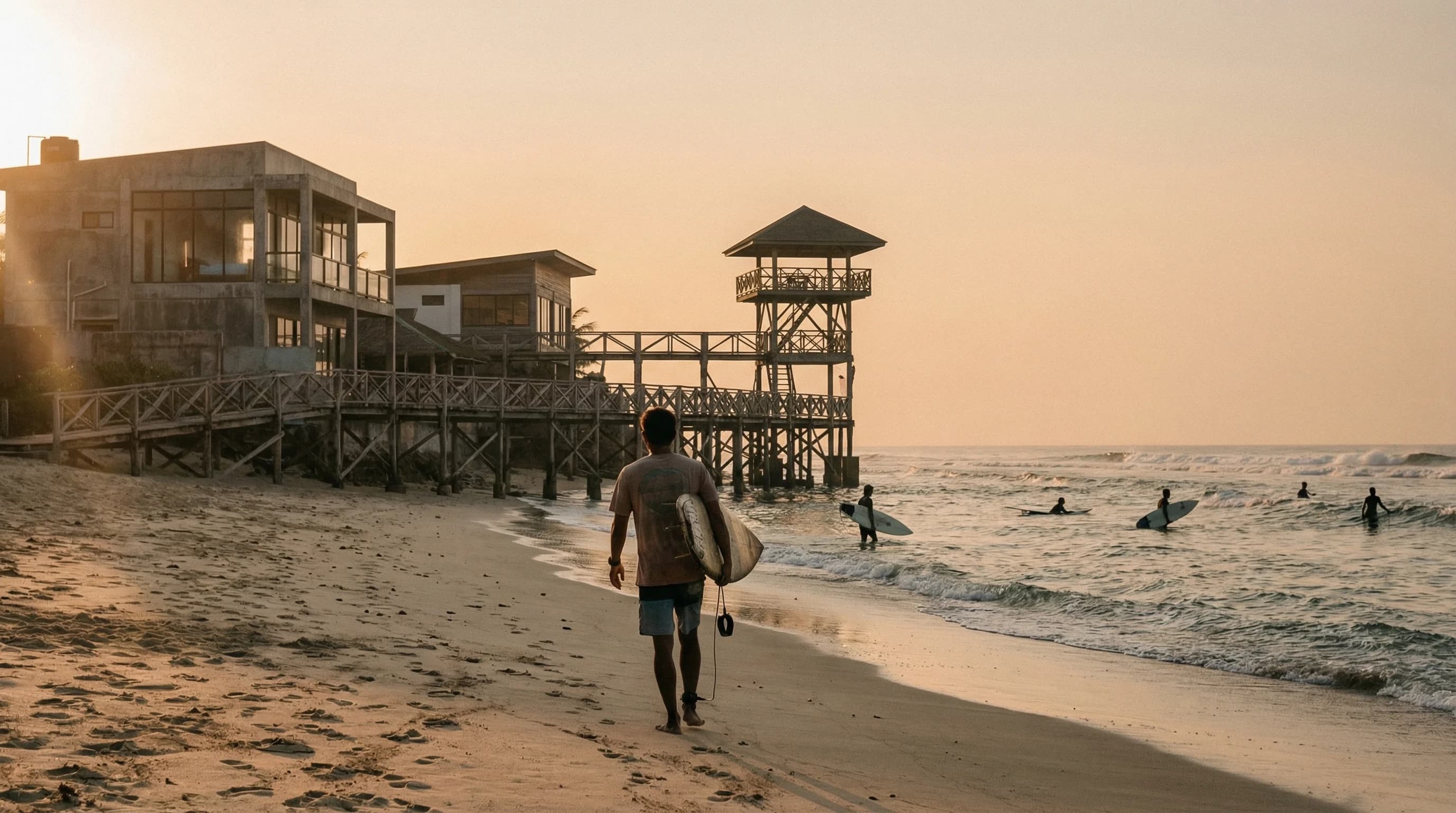
Land prices in Boracay's prime zones run ₱80,000 to ₱120,000+ per square meter. On Siargao, you can pick up a lot near Cloud 9 for ₱12,000 to ₱25,000/sqm. That's not a typo. The price gap between the Philippines' established tourist islands and its emerging ones is massive, and it creates a real window for investors who move before the gap closes.
We've spent years tracking construction costs and rental data on Siargao. For this piece, we're widening the lens to compare four Philippine destinations that attract foreign villa builders: Siargao, El Nido (Palawan), Boracay, and Moalboal (Cebu). Each has different strengths. One of them, we think, clearly offers the best value right now.
Philippine Tourist Destinations for Villa Investment
The Philippines has dozens of beach destinations, but only a handful have the tourist volume and infrastructure to support vacation rental investments. These four stand out for different reasons.
Siargao is the surf capital. Cloud 9's world-class break anchors a growing tourism economy that's still in its early growth phase. Direct flights from Manila and Cebu started only a few years ago, and new restaurants, boutique hotels, and co-working spaces keep opening along Tourism Road. The island attracts surfers, digital nomads, and experience-seeking travelers who stay longer than the typical beach tourist.
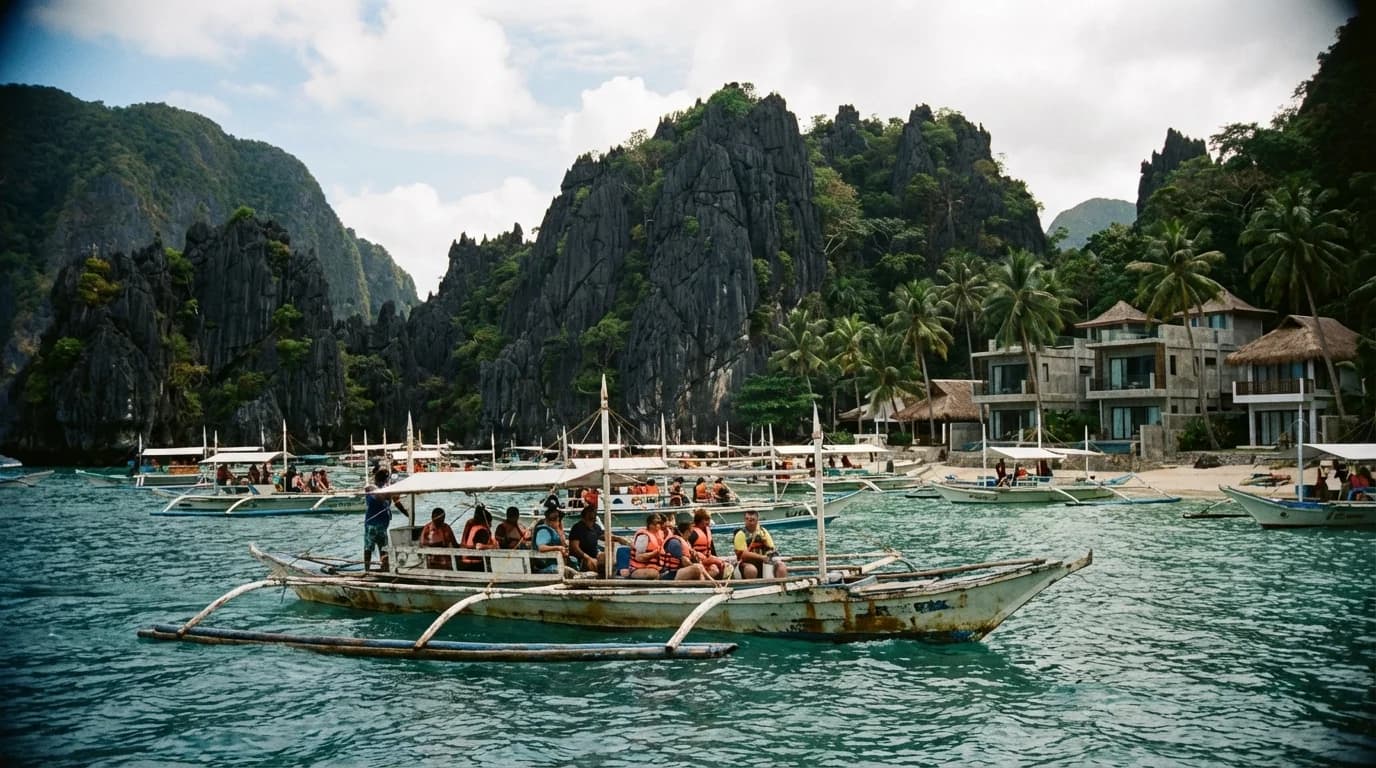
El Nido on Palawan draws island-hopping tourists with its limestone karst scenery and crystal lagoons. It's been a top Philippine destination for over a decade and commands premium pricing. The local government, though, has become increasingly strict about environmental protection, which affects where and how you can build.
Boracay was the Philippines' original international beach brand. After the 2018 government-ordered closure and rehabilitation, the island operates under tight development controls. New construction is heavily restricted, land supply is extremely limited, and prices reflect that scarcity.
Moalboal in southern Cebu is the dark horse. Famous among divers for the sardine run and Pescador Island, it offers the lowest entry costs of the four. It's accessible (3 hours from Cebu City by car), has reliable infrastructure, and tourist arrivals have grown steadily. The trade-off: it's a niche market that relies on the diving community rather than mainstream tourism.
Land Costs: Where Your Money Goes Further
This is where the differences become stark.
| Destination | Land Price Range (₱/sqm) | 500 sqm Lot Cost | Availability |
|---|---|---|---|
| Siargao (Cloud 9) | 12,000 - 25,000 | ₱6M - 12.5M | Moderate supply |
| Siargao (Tourism Road) | 5,000 - 12,000 | ₱2.5M - 6M | Good supply |
| El Nido | 20,000 - 50,000+ | ₱10M - 25M+ | Limited |
| Boracay | 80,000 - 120,000+ | ₱40M - 60M+ | Very limited |
| Moalboal | 5,000 - 15,000 | ₱2.5M - 7.5M | Good supply |
Siargao's land prices come directly from our database of verified transactions. On the island's prime corridor (Cloud 9 to General Luna), average prices sit at ₱12,000 to ₱18,000/sqm. Move slightly inland along Tourism Road and you're looking at ₱5,000 to ₱12,000/sqm with strong rental potential.
El Nido prices vary wildly depending on proximity to the beach and which barangay you're in. Corong-Corong and Lio Estate areas command the highest premiums. Inland lots in Barangay Buena Suerte or Masagana can still be found at lower prices, but they're further from the tourist draw.
Boracay is essentially a closed market for new land buyers. The island is only 1,032 hectares total, and a significant portion falls under environmental protection zones. Most "available" properties are resales of existing titled lots at extreme premiums.
Moalboal offers the cheapest entry. Lots along the coastal road in Barangay Saavedra or Basdiot can still be found for ₱5,000 to ₱10,000/sqm. Beachfront commands more, but you won't hit the numbers you see in El Nido or Boracay.
Ownership and Legal Restrictions
Every destination operates under the same base rule: foreigners can't own land in the Philippines. The standard workaround is a 60/40 Filipino corporation where you hold 40% equity and a Filipino partner holds 60%. Long-term leases (25+25 years) are the other common route. These structures work the same way across all four islands.
What changes by location is the regulatory environment on top of that baseline.
Boracay is the most restrictive. After the 2018 rehabilitation, DENR (Department of Environment and Natural Resources) imposed a permanent 25+5 meter easement from the high-tide line. The Boracay Inter-Agency Rehabilitation Management Group (BIARMG) reviews all new construction. Many lots that had building permits before 2018 no longer qualify. Getting approval for a new villa project is difficult and slow, if it's possible at all.
El Nido falls within an Environmentally Critical Area (ECA) designation. The El Nido-Taytay Managed Resource Protected Area (ENTMRPA) covers much of the municipality. Building permits require an Environmental Compliance Certificate (ECC) from DENR, which adds 3 to 6 months to the process. Height restrictions, setback requirements, and tree-cutting permits add further constraints.
Siargao has straightforward permitting by comparison. You'll need the standard Philippine building permits (building, electrical, sanitary, fencing, barangay clearance, zoning, fire safety, and occupancy). On Siargao, the full permit package runs around ₱70,000 to ₱150,000 depending on floor area. There's no special environmental overlay like El Nido's ECA or Boracay's BIARMG approval. The DENR does require an Environmental Compliance Certificate for shoreline-adjacent properties, but the process is manageable.
Moalboal follows standard Cebu provincial permitting. No special environmental designations apply to most buildable areas. The municipality processes permits at the local level with minimal additional bureaucracy. Of all four destinations, Moalboal probably has the simplest permitting path.
Construction Costs by Location
Here's a surprise: construction costs per square meter don't vary as dramatically between islands as land prices do. The main factors that drive construction cost are quality tier and logistics, not geography.
| Cost Factor | Siargao | El Nido | Boracay | Moalboal |
|---|---|---|---|---|
| Standard build (₱/sqm) | 36,000 | 38,000 - 42,000 | 45,000 - 55,000 | 34,000 - 38,000 |
| Mid-range build (₱/sqm) | 45,000 | 48,000 - 55,000 | 55,000 - 70,000 | 42,000 - 48,000 |
| High-end build (₱/sqm) | 65,000 | 70,000 - 85,000 | 80,000 - 100,000+ | 60,000 - 70,000 |
| Logistics premium | High | Very high | Moderate | Low |
| Contractor availability | Growing | Limited | Limited | Good |
Siargao construction rates come from our verified data. Standard quality runs ₱36,000/sqm, mid-range hits ₱45,000/sqm, and high-end reaches ₱65,000/sqm. Materials ship from Surigao City (a 2.5-hour ferry), which adds a logistics premium but not as severe as El Nido's.
El Nido is arguably the most expensive island to build on. Materials come by truck from Puerto Princesa (5-6 hours on a rough road) or by barge. The limited contractor pool means skilled labor commands a premium. Environmental compliance requirements can add 10-15% to project costs through mandatory design changes.
Boracay construction costs are inflated by the regulatory burden and limited space for staging materials. However, the island benefits from established supply chains and proximity to Panay Island for materials.
Moalboal has the lowest construction costs because it's on Cebu, the Philippines' second-largest island. Materials don't need to cross water. Contractors, engineers, and architects are abundant in Cebu City, just three hours away. This accessibility translates directly into lower bids and faster timelines.
Rental Income: Comparing Markets
This is where the investment case gets interesting. We have hard data for Siargao from our rental market tracking. For the other destinations, we're drawing on published Airbnb analytics and local property manager reports.
| Destination | 2BR Pool Villa (₱/night) | Occupancy | Est. Gross Annual |
|---|---|---|---|
| Siargao | 11,700 | 71% | ~₱3.0M |
| El Nido | 14,000 - 18,000 | 65 - 75% | ~₱3.5M - 4.5M |
| Boracay | 15,000 - 22,000 | 70 - 80% | ~₱3.8M - 6.4M |
| Moalboal | 6,000 - 9,000 | 50 - 60% | ~₱1.1M - 2.0M |
On Siargao, a 2-bedroom pool villa averages ₱11,700/night at 71% occupancy. Bump that to 3 bedrooms and you're looking at ₱17,200/night with 84% occupancy, roughly ₱5.3M gross annual. These figures come directly from our market rate data, not projections.
El Nido commands higher nightly rates, especially for properties with lagoon or beach views. The island's year-round tourist flow (peaking November through May) supports solid occupancy. But remember: you're paying 2 to 4 times more for land and 10 to 30% more for construction. The higher gross revenue needs to cover a much larger initial investment.
Boracay generates the highest raw revenue numbers. The island's brand recognition drives volume bookings, and the limited villa supply keeps rates high. But entering this market requires ₱40M+ before you even break ground. The ROI percentage often disappoints relative to the capital deployed.
Moalboal is the weakest rental market of the four. The diving niche provides steady but modest demand. Occupancy rates for villas hover around 50 to 60%, and nightly rates reflect the lower willingness to pay from the backpacker and diver demographic. You can build cheaply, but the income side of the equation is thinner.
Why Siargao Offers the Best Value Right Now
We're biased. We'll say that upfront. Our entire platform is built around Siargao construction data. But the numbers support the bias.
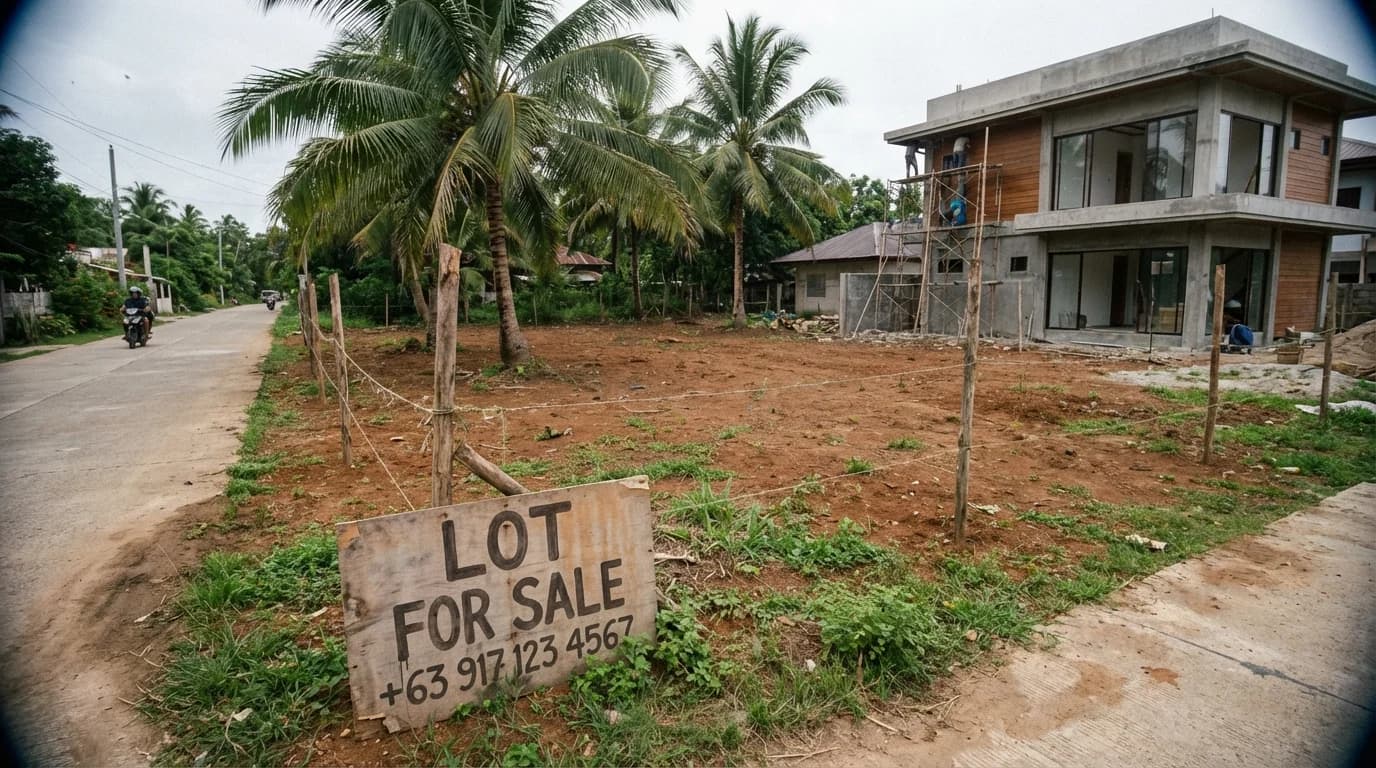
Lower entry cost. A 2-bedroom mid-range pool villa on Siargao (including land on Tourism Road, construction, pool, furnishing, and infrastructure) runs roughly ₱8M to ₱12M total. The same project in El Nido would cost ₱15M to ₱22M. In Boracay, if you could even get permits, you'd be looking at ₱30M+. Only Moalboal comes close on cost, but the rental income doesn't match.
Stronger appreciation potential. Siargao is earlier in its development curve. The airport expansion is underway. New direct flights keep getting added. Road infrastructure is improving. When you buy into a destination before the infrastructure catches up to the demand, you're positioned for the kind of land appreciation that El Nido saw between 2010 and 2020.
Less regulatory risk. No special environmental overlays. No government rehabilitation programs. No moratoriums on construction. You can get permits, build, and open for bookings without navigating an extra layer of bureaucratic risk.
Proven rental demand. The numbers above aren't speculative. A 3-bedroom pool villa at 84% occupancy generating ₱17,200/night is happening right now, in 2026, on properties our users have built and listed.
That said, Siargao isn't perfect. Typhoons hit the island (Rai in 2021 was devastating). Power reliability from Siarelco is improving but still inconsistent. The ferry from Surigao adds logistics cost and construction delays during monsoon season. These are real factors that you should plan for, and they're part of why we always recommend building a 10% contingency into every budget.
The Full Comparison
| Factor | Siargao | El Nido | Boracay | Moalboal |
|---|---|---|---|---|
| Land (₱/sqm) | 5,000 - 25,000 | 20,000 - 50,000+ | 80,000 - 120,000+ | 5,000 - 15,000 |
| Construction (₱/sqm) | 36,000 - 65,000 | 38,000 - 85,000 | 45,000 - 100,000+ | 34,000 - 70,000 |
| 2BR Nightly Rate | ₱11,700 | ₱14,000 - 18,000 | ₱15,000 - 22,000 | ₱6,000 - 9,000 |
| Occupancy | 71% | 65 - 75% | 70 - 80% | 50 - 60% |
| Permitting | Standard | ECA overlay | BIARMG restricted | Standard |
| Logistics | Ferry from Surigao | Road from Puerto Princesa | Barge from Panay | Road from Cebu City |
| Growth Stage | Early growth | Established | Saturated | Niche |
| Our Rating | Best value | Premium play | Trophy asset | Budget entry |
Frequently Asked Questions
Can foreigners build a villa anywhere in the Philippines?
Foreigners can build in any Philippine municipality, but you can't own the land directly. The standard structure is a 60/40 Filipino corporation or a long-term lease. Some destinations (Boracay, El Nido) have additional restrictions that limit where and what you can build regardless of ownership structure.
Which Philippine island has the best ROI for villa investment?
Based on the ratio of rental income to total investment cost, Siargao currently offers the strongest returns. Lower land and construction costs combined with competitive nightly rates (₱11,700/night for a 2BR pool villa) produce higher percentage returns than the more expensive destinations. Check our Airbnb income breakdown for detailed numbers.
Is it too late to invest in El Nido or Boracay?
Not too late, but significantly more expensive. El Nido still has growth potential, especially as Palawan's airport infrastructure improves. Boracay is effectively a mature market where you're buying income stability rather than appreciation. Both require substantially more capital than Siargao or Moalboal.
How do construction timelines compare across islands?
Siargao builds typically take 8 to 14 months depending on size and quality. El Nido runs 10 to 18 months due to material logistics and environmental permitting. Boracay timelines are unpredictable given regulatory approvals. Moalboal benefits from Cebu's infrastructure and can match or beat mainland timelines at 6 to 12 months. Read our construction timeline guide for a detailed phase breakdown.
The Philippines has no shortage of beautiful places to build a villa. But if you're looking at this as an investment, not just a lifestyle purchase, the numbers point to Siargao as the strongest opportunity in 2026.
Explore specific areas on Siargao in our location guides, compare land prices across the island, or run your own numbers with our construction cost calculator.
